A Designer’s Review: Nurses We Can't Fix Stupid
When a new design file lands on my desk, my first instinct is to picture it stitched out. Not on a digital mockup, but on real fabric, under a hoop, with thread. Today, I’m looking at “Nurses We Can’t Fix Stupid but We Can Sedate It.” As a quote-based graphic intended for apparel and gifts, it presents an interesting challenge and opportunity for embroidery designers and makers.
First Impressions: Humor with a Professional Edge
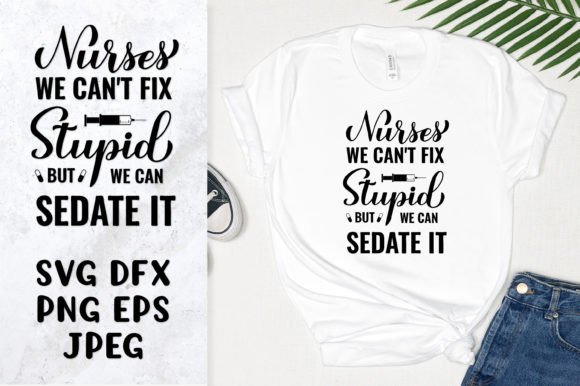
The design’s personality is immediately clear. It’s witty, slightly irreverent, and carries a tone of professional camaraderie. This isn’t a soft, inspirational quote; it’s a bold statement that resonates with a specific audience. Visually, as a vector file, it promises clean lines and scalable detail, which is excellent for embroidery adaptation. The layout likely centers on the text, perhaps with a simple graphical accent, making it a straightforward but impactful statement piece.
Where This Design Shines in Real Projects
This nurse quote graphic naturally fits projects where the humor and message are the forefront. Imagine embroidering it onto a tote bag for a nurse friend—the bold statement becomes a personalized gift they’ll genuinely appreciate. For small business owners crafting merchandise, it could be a standout on a sweatshirt or apron sold at craft fairs, appealing directly to healthcare workers. As a custom patch, it would add personality to a backpack or jacket. The design’s strength is its niche appeal; it won’t be for everyone, but for its target audience, it’s engaging and relatable.
Visual Appeal and Customer Trust in Finished Products
When stitched out, a design like this relies heavily on clarity. Every word needs to be legible after stitching. A clean satin stitch for lettering or a precise fill stitch for any graphical elements would be key. On a finished product, like an embroidered pillow cover for a nurse’s lounge or a tea towel in a clinic kitchen, this clarity translates directly to perceived value. It shows care in execution. For an Etsy seller or boutique, offering this on a high-quality garment, like a premium cotton t-shirt or a sturdy denim cap, pairs the bold message with a professional handmade presentation, building customer trust.
Navigating the Practical Embroidery Challenges
This is where a designer’s practical judgment comes in. The phrase has a mix of longer and shorter words. “Sedate” and “Stupid” are key, and their small lettering could become dense or blurry if not handled correctly.
Hoop size matters. I would not attempt this on a very small hoop. A larger field allows for better stitch definition, preventing tiny letters from becoming a muddle of thread. Textured fabrics like some sweatshirt materials can eat up detail; a good stabilizer is non-negotiable here. On dark fabrics, thread color contrast is paramount—a bright, crisp white or a contrasting color pop would be essential. On curved surfaces like caps, the layout must be tested; the design might need slight adjustment to sit cleanly on the curve.
Products that require frequent washing, like kitchen towels or baby clothes (though this design is clearly for adult-themed items), need a robust stitch density that won’t fray or degrade quickly. Testing on scrap fabric first is always my rule.
Designer Notes for a Successful Stitch Out
Before committing this to a client’s project or a batch of shop merchandise, here’s my mental checklist:
- Test, test, test. Run it on scrap fabric that matches your final product material—both light and dark backgrounds.
- Inspect the small details. Zoom in on the provided files. Are the corners of letters sharp? Are any graphical elements too fine for machine embroidery?
- Consider thread colors. Plan a palette that ensures high contrast and readability. Sometimes black thread on black fabric for a shadow effect can work, but clarity is the goal here.
- Confirm licensing. The product description lists multiple file formats for making your own items. Always verify the specific license for commercial use if you plan to sell the finished embroidered products or digital products derived from it.
- Think about giftability and brand. If you’re a creative entrepreneur, does this design fit your brand’s voice? As a gift, it’s perfect for a specific recipient, but may not be a generic holiday gift.
The Bigger Picture for Makers and Entrepreneurs
Using “Nurses We Can’t Fix Stupid but We Can Sedate It” isn’t just about stitching a funny quote. It’s about understanding your audience. For apparel decorators, it’s a conversation-starting piece. For digital product sellers creating printable mockups, it’s a graphic with strong niche appeal. In my own work, I see it as a design that, when executed well, adds a layer of personalized connection to a product. It turns a simple tote bag into a statement for a nurse, or a standard sweatshirt into a piece of identity merchandise.
The final judgment? This design has practical value for makers targeting the healthcare community or those who appreciate this brand of humor. Its success hinges entirely on the embroidery execution—clean stitching, thoughtful placement, and appropriate product pairing. Avoid thin, stretchy fabrics where distortion could ruin the phrasing. Embrace sturdy, flat surfaces like bag panels, apron bibs, or pillow fronts. With careful planning, it can become a standout piece in your embroidery project lineup or your small shop product offerings, precisely because it feels real, relatable, and well-made.